
Knee pain can often be reduced without medication by combining gradual movement, targeted strengthening, activity changes, and simple temperature therapy. The safest approach depends on whether the pain followed an injury, developed gradually, or comes with swelling, instability, or other symptoms.
What is causing the knee pain?
The cause matters because “knee pain” is not one condition. Common possibilities include osteoarthritis, tendon irritation, kneecap-related pain, bursitis, a sprain, or an injury to a ligament or meniscus. Pain can also be referred from the hip or lower back.
Osteoarthritis commonly causes aching with activity, stiffness after sitting, swelling, and reduced flexibility. It is more common with age, but persistent knee pain should not automatically be dismissed as normal aging. A healthcare professional may use a physical examination, medical history, and sometimes imaging to identify the cause. ([cdc.gov](https://www.cdc.gov/arthritis/osteoarthritis/index.html?utm_source=openai))
A sudden injury deserves extra caution. A twisting incident, fall, or awkward landing may cause damage even when the knee does not swell immediately.
Can gentle exercise reduce knee pain?
Yes. Appropriate physical activity can decrease pain and improve strength, mobility, and daily function. Avoiding all movement may make the knee stiffer and weaken the muscles that help support it. Exercise is considered a core part of managing knee osteoarthritis. ([pmc.ncbi.nlm.nih.gov](https://pmc.ncbi.nlm.nih.gov/articles/PMC11488261/?utm_source=openai))
Start below the level that aggravates symptoms. Useful low-impact options include:
- Short, level walks
- Stationary cycling with light resistance
- Water exercise
- Gentle range-of-motion movements
- Controlled strengthening exercises
For residents managing icy sidewalks or uneven outdoor surfaces during winter, indoor walking, cycling, or water-based exercise may provide a safer alternative. During warmer months, gardening, yard work, and longer walks should be divided into shorter periods rather than completed all at once.
A practical starting point is five to ten minutes of comfortable activity, followed by a rest period. Increase duration slowly if pain does not worsen later that day or the following morning.
Which exercises help support the knee?
Strengthening the quadriceps, hips, and hamstrings can reduce stress on the knee by improving control of the leg. Exercises should be slow and controlled, without forcing the joint into painful positions.
Common examples include:
- Straight-leg raises: Lie on your back with one knee bent and the other leg straight. Tighten the thigh of the straight leg, raise it several inches, pause briefly, and lower it slowly.
- Seated knee extensions: While sitting in a sturdy chair, slowly straighten one knee, pause, and return the foot to the floor.
- Glute bridges: Lie on your back with both knees bent. Tighten the abdominal and buttock muscles, lift the hips gently, and lower them with control.
- Sit-to-stand practice: Use a stable chair and rise without pushing hard through the arms. Keep the knees aligned with the feet.
Do not push through sharp, stabbing, or steadily increasing pain. A general conditioning program is not appropriate for every diagnosis, particularly soon after surgery or a significant injury. The American Academy of Orthopaedic Surgeons advises using exercises suited to an individual’s condition and stopping if an exercise causes pain. ([orthoinfo.aaos.org](https://orthoinfo.aaos.org/globalassets/pdfs/2023-rehab_knee_10-16-23.pdf?utm_source=openai))
Should you use ice or heat?
Both may help, but they serve different purposes.
Cold is generally more useful after a recent injury or when the knee is swollen following activity. Use a cold pack wrapped in a towel for up to about 20 minutes. Do not place ice directly on the skin or fall asleep with it in place. Elevating the leg can also help with swelling after a minor injury. ([niams.nih.gov](https://www.niams.nih.gov/health-topics/sports-injuries/diagnosis-treatment-and-steps-to-take?utm_source=openai))
Heat may be useful for stiffness, muscle tension, or discomfort before gentle movement. A warm shower or heating pad on a low setting can make motion feel easier. Heat is usually not a good choice immediately after an injury if the knee is hot or visibly swollen.
Temperature therapy often provides temporary relief rather than correcting the underlying problem. If swelling repeatedly returns, the cause should be assessed.
How can daily activities be modified?
Small changes can reduce repeated stress without requiring complete rest. Consider:
- Taking shorter trips while carrying groceries or household items
- Using a handrail on stairs
- Turning the whole body instead of twisting on a planted foot
- Alternating sitting, standing, and walking
- Avoiding deep squats or kneeling during a painful flare
- Using a stable chair when doing tasks at floor level
- Choosing supportive, comfortable footwear
Snow, ice, and wet leaves can increase the chance of a slip or sudden knee twist. Clearing walking paths, using adequate lighting, and avoiding hurried steps may prevent an injury from becoming a longer-term problem.
A brace, cane, or other support may help some people, but it should fit the situation. Improper use can change walking mechanics or conceal worsening symptoms.
Can weight changes affect knee discomfort?
For people carrying excess weight, even modest weight loss may reduce loading on the knees and improve movement. Weight management is one of the evidence-supported approaches for knee osteoarthritis, along with physical activity and self-management education. ([cdc.gov](https://www.cdc.gov/arthritis/osteoarthritis/index.html?utm_source=openai))
This does not mean that every person with knee pain needs to lose weight, or that weight is the only explanation for symptoms. A balanced eating pattern and gradual activity plan are more sustainable than sudden restrictions, especially when pain limits exercise.
How much discomfort is acceptable during exercise?
Mild stiffness or a small increase in soreness can occur when beginning a new routine, but symptoms should settle rather than build. Reduce the duration, intensity, or frequency if discomfort lasts for hours afterward.
Stop and seek medical advice if exercise causes:
- Sharp or constant pain
- A noticeable limp
- Increasing warmth, redness, or swelling
- Pain that is worse at night
- Symptoms that remain worse for more than a couple of hours after activity
The Centers for Disease Control and Prevention recommends modifying activity and choosing lower-impact options when needed, while treating persistent or worsening symptoms as a reason for evaluation. ([archive.cdc.gov](https://archive.cdc.gov/www_cdc_gov/arthritis/basics/physical-activity/pain.html?utm_source=openai))
When does knee pain need prompt evaluation?
Seek urgent care after a major fall, collision, or twisting injury if the knee looks deformed, cannot bear weight, locks in place, or becomes rapidly swollen. Prompt medical evaluation is also appropriate for fever with a red, hot, swollen knee, calf swelling, new numbness, or severe unexplained pain.
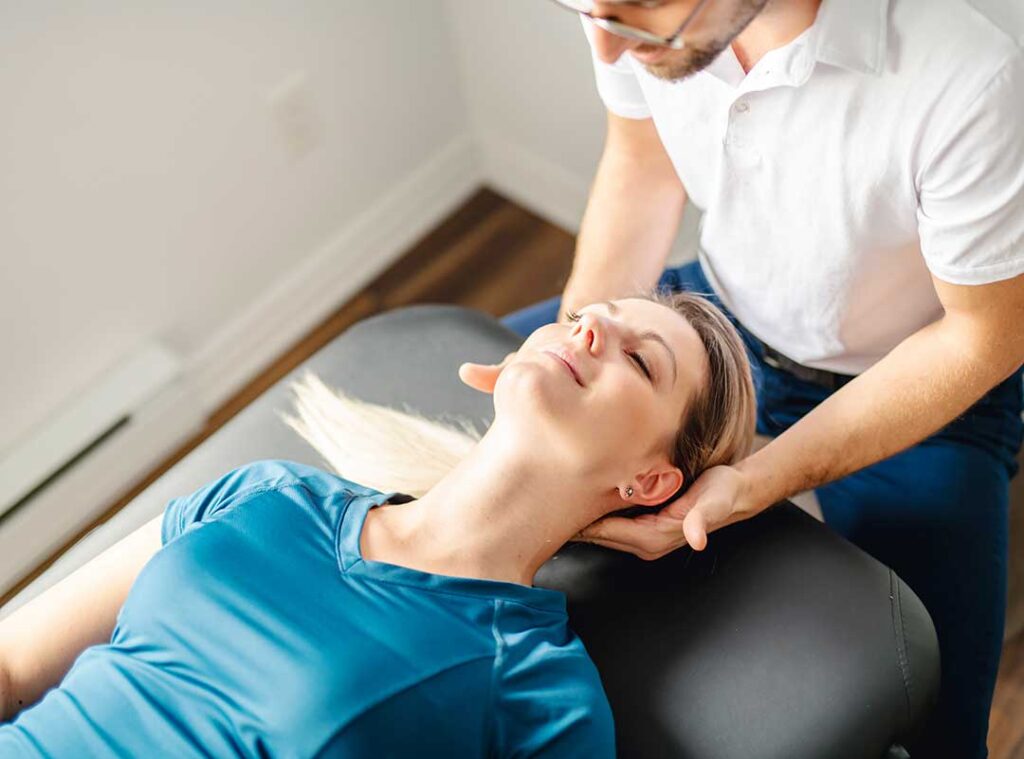
For ongoing pain, evaluation is worthwhile when symptoms interfere with sleep, work, stairs, driving, or ordinary household activities. A chiropractor, physical therapist, primary care clinician, or other qualified healthcare professional may help determine whether the problem is related to the knee, hip, lower back, walking pattern, or a specific injury. Manual treatment may be considered in some situations, but exercise selection, load management, and an accurate diagnosis remain central to safe care.
A simple non-medication routine
A reasonable home routine may include five minutes of gentle movement, one or two strengthening exercises, and a short period of cold or heat based on the symptoms. Track what increases pain, what improves movement, and how the knee feels the next morning. That information can help identify patterns and guide safer adjustments.
Persistent knee pain is easier to manage when activity is paced, strength is rebuilt gradually, and warning signs are taken seriously.
